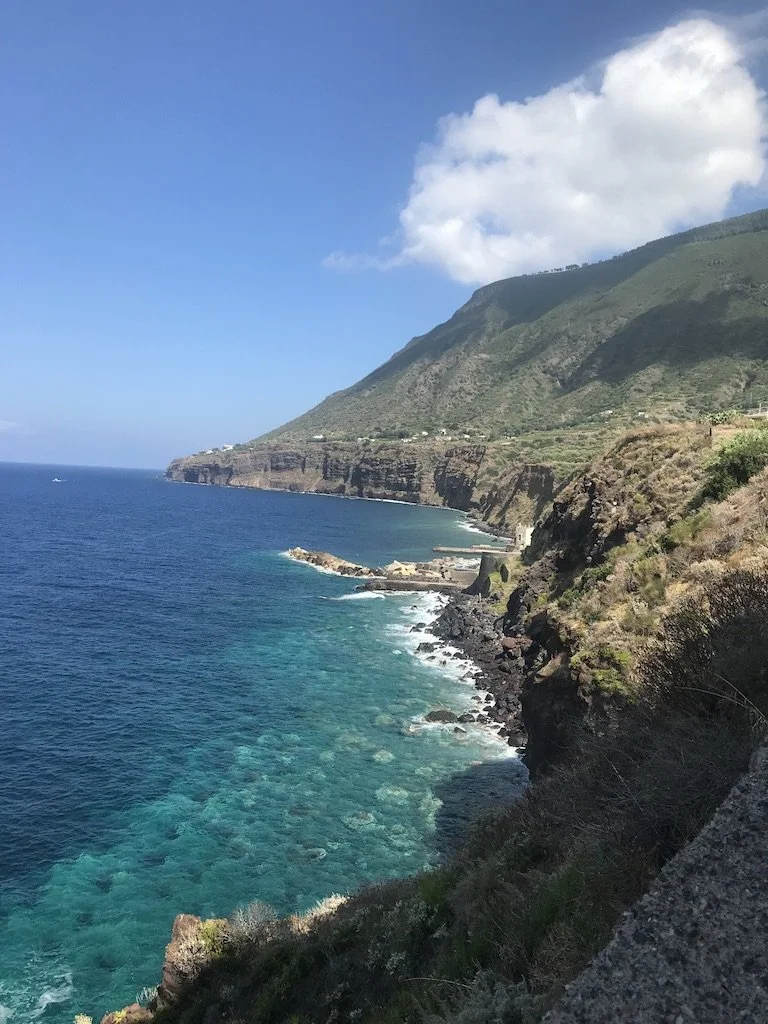
The ferry dock in Naples is pure mayhem: luggage everywhere, overheated dogs, restless children, and travelers trying to find their place in the crowd. Roxy and I are carried along with the crush like Iggy Pop after a stage dive.
By the time we reach the queue, the scheduled departure time has passed. The ferry is still at the dock, though, and no one seems to be in a hurry. When I ask the British travelers ahead of us what’s going on, they shrug. “This is Italy. Nothing happens on time.”
“Would’ve been good to know before we sprinted down the dock!” Roxy says, throwing down her bags in a huff.
Eventually, our luggage is loaded and we board. The seats don’t recline, the snack bar is underwhelming, and the air-conditioning is sparse—but the World Cup final is on, providing a welcome distraction as we cross the Tyrrhenian Sea toward Panarea.
Panarea: Volcanic Beauty and the Art of Doing Nothing
Part of the Aeolian archipelago north of Sicily, Panarea is small, chic, and shaped by its volcanic origins. There are no cars, only upscale beach-club vibes. A friend once described it as “Capri when it was still Capri,” and the comparison makes sense: there’s a polished side to the island, but its wild beauty is never far away.
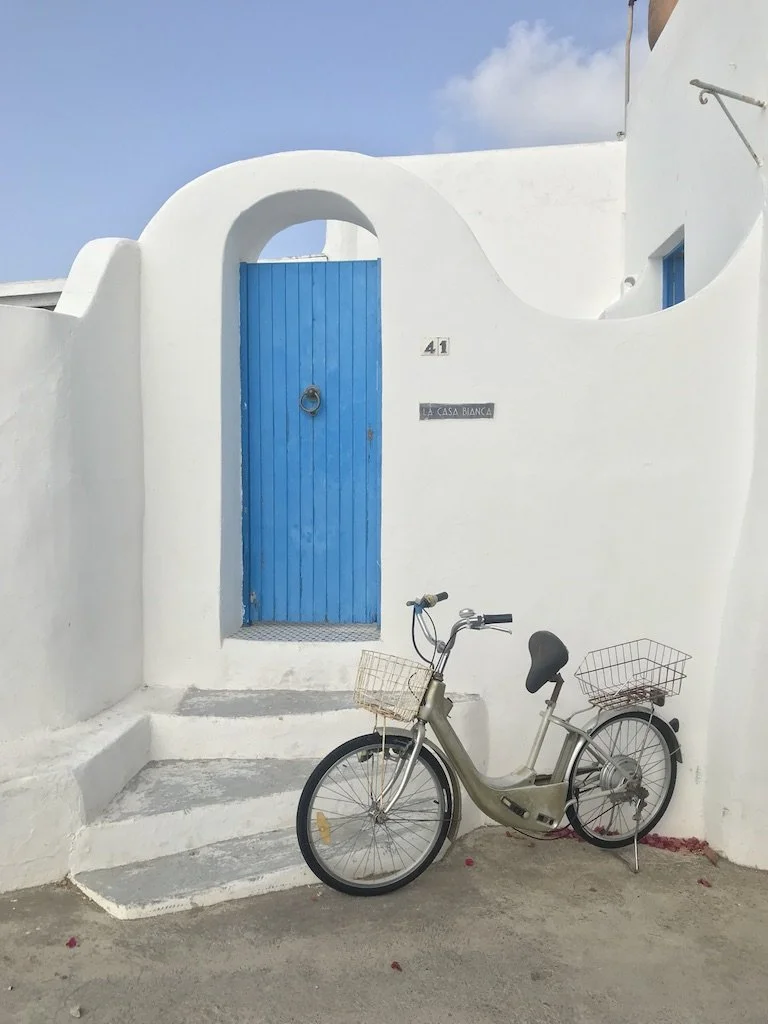
At dusk, a golf cart carries us up the steep hill to Hotel Raya. Its whitewashed buildings, manicured gardens, and colorful flowers feel perfectly in tune with the island—simple, charming, and without the scale or flash of a big resort.
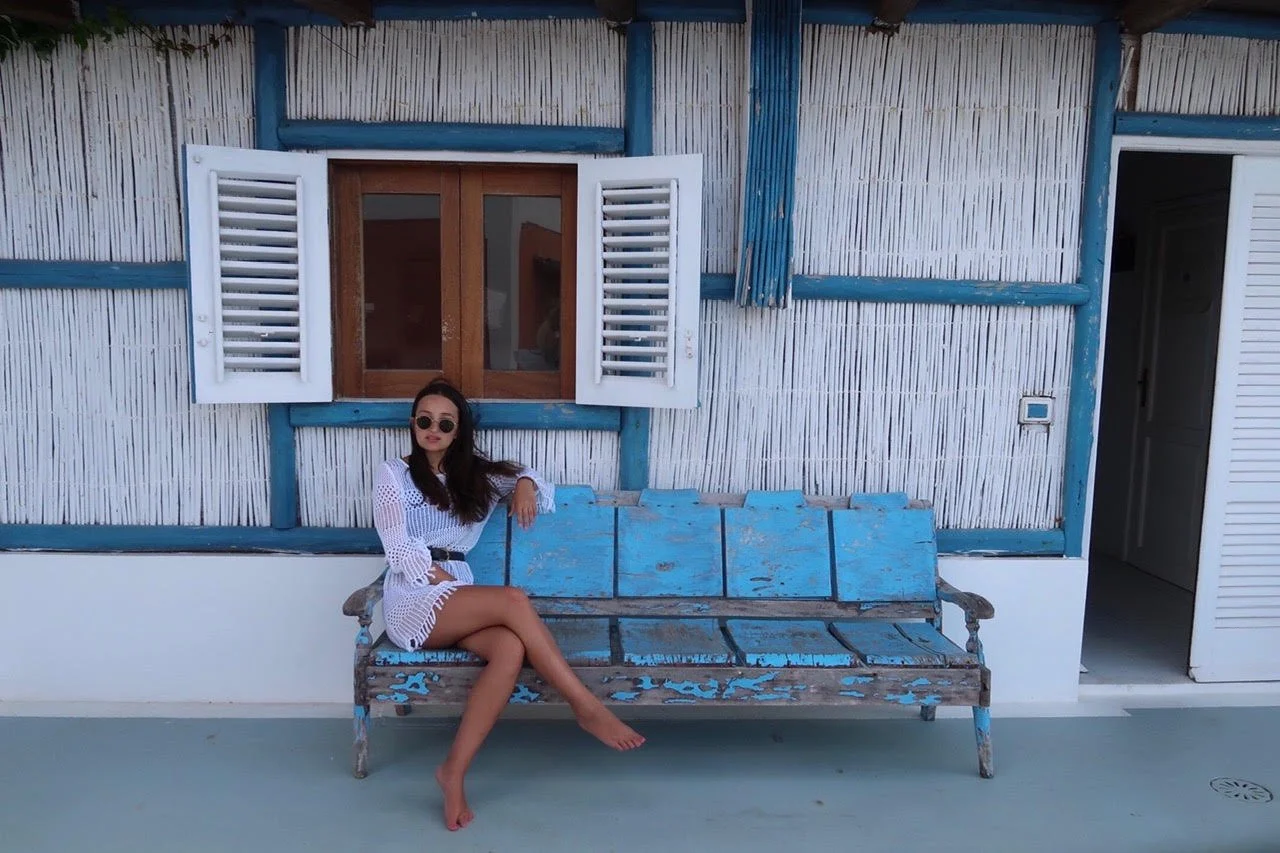
We wake up in our light, airy suite to a view of impossibly blue water. On our first full day, we meet Alejandro from Milan and his childhood friend Estevan from Tulum. Alejandro has a plan for the day: skip the pool and swim in the Mediterranean “like an otter.” We are immediately in.
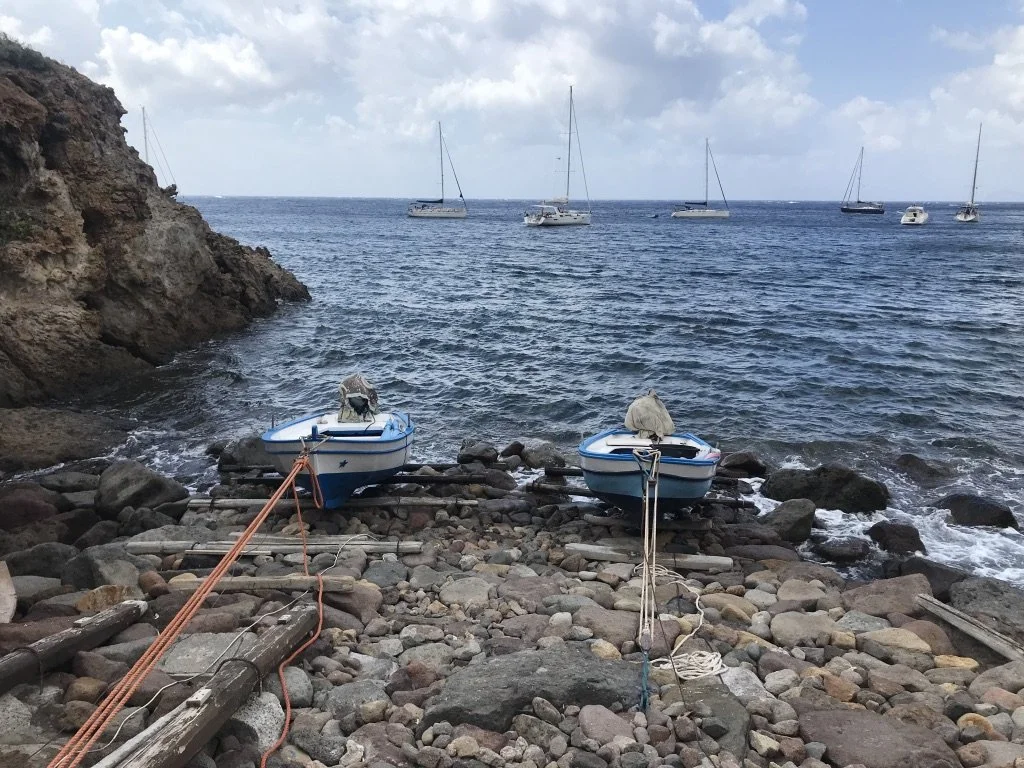
Spontaneous seafaring buddies, we spread out as if we’re seals to sun ourselves on the large, flat boulders. We spend the day together, dipping in and out of the magical sea from the swimming platform. The water is warm, clear, delicious. Returning to our perched lounge chairs and beach blankets, we order cocktails to match the spirit of newly discovered friendship.
The hotel pool becomes its own little meeting place. We get chatting with Filomena, an Australian makeup artist traveling with her husband and two daughters, and soon the conversation spreads to food, fashion, music, beauty, and the places we’ve each been or hope to go. It’s one of the joys of travel: people who might never have crossed paths at home end up sharing a sunny afternoon and a story or two.
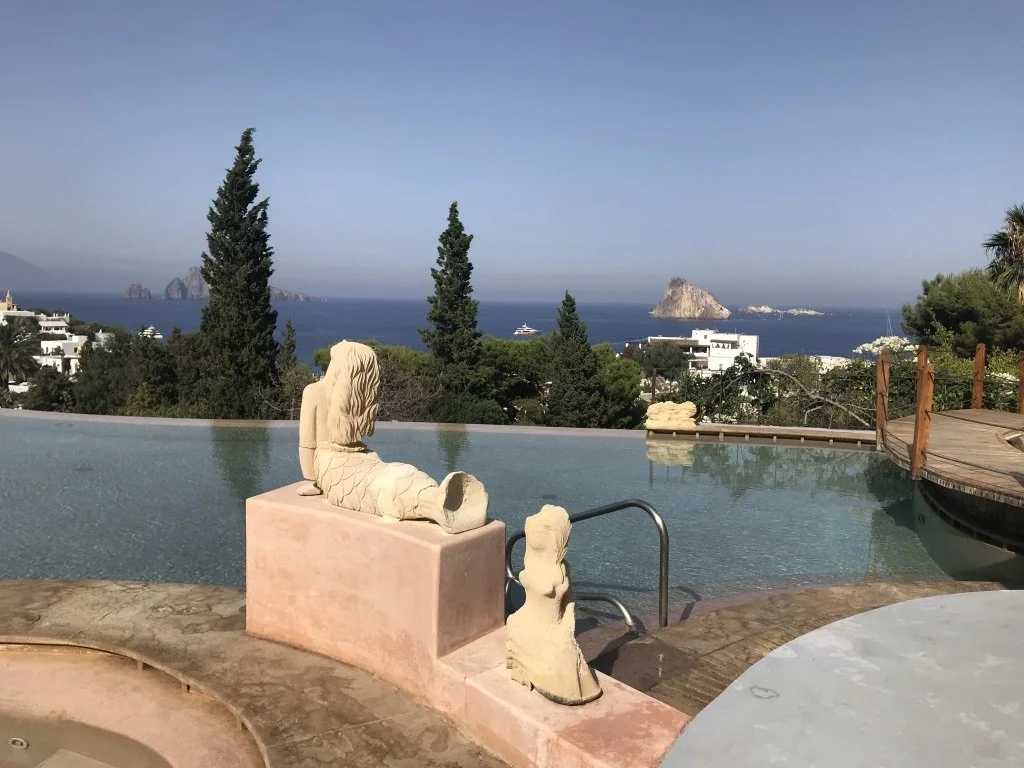
Estevan sums up the mood beautifully: “Doing nothing well is an art.” I’ve always found it hard to lie still without feeling I ought to be doing something. Panarea is turning out to be an excellent place to practice.
Roxy captures the feeling on our walk back to the room: “It’s pure destiny. I love this hotel. It’s so special.” She is right. We came for the island, but the people we meet quickly become part of the reason we love it.
Aperitivo, Island Style
Panarea’s evenings are made for rooftop drinks and long dinners. One night, over Aperol spritzes at the hotel bar, Estevan spots a table of travelers and announces, “That one. Yes, that one! The one with the beard.”
“Which one?” Roxy asks.
He gestures vaguely toward the whole table. Alejandro turns to Roxy and me. “Who do you think is the most handsome?” We both pick the redhead—a rare departure for us, since we usually go for tall, dark, and handsome. Estevan plants a hand on his hip. “You know, honeys, they are straight!”
At dinner, we meet Dillon, the redhead, and his three friends. He starts ordering drinks for our table with a theatrical little “ta-da!” and, before long, we’re all making plans to continue the evening at The Bridge, a rooftop bar with pink stairs, bright outdoor seating, and views toward neighboring Stromboli.
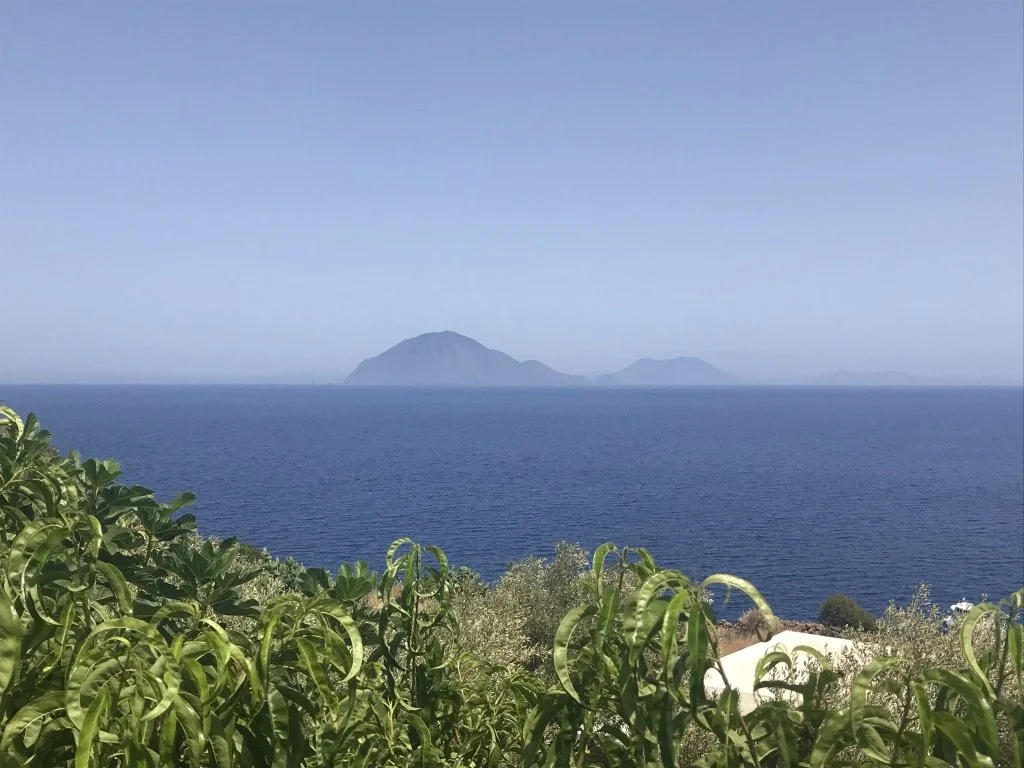
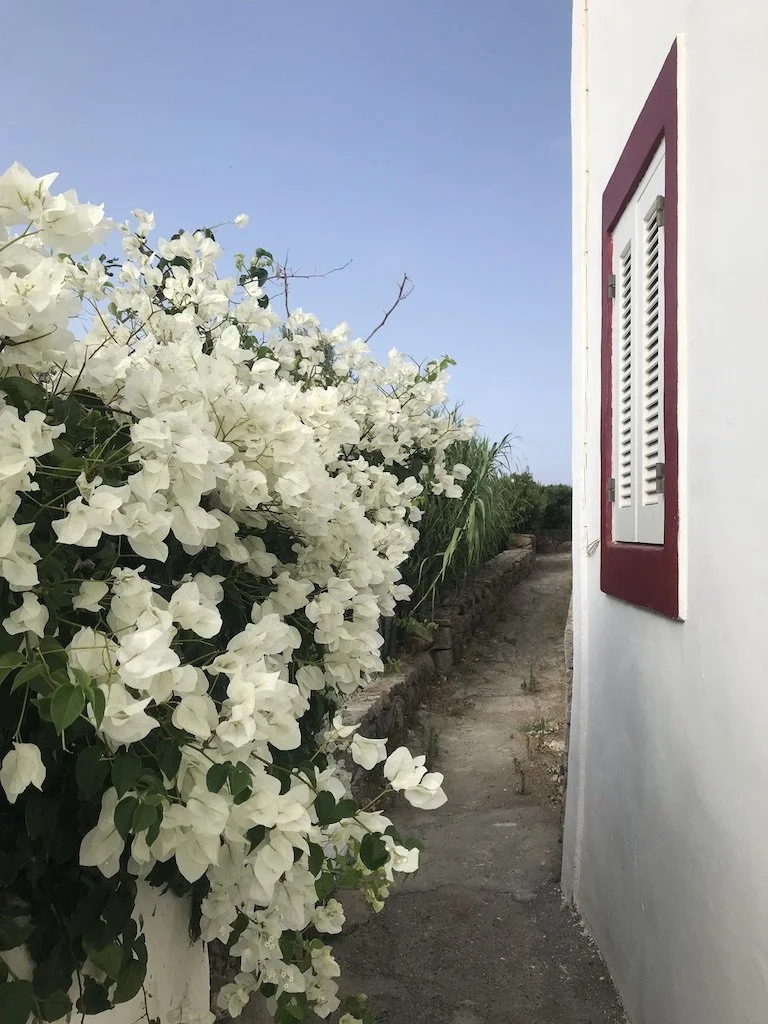
The next morning, we wander Panarea’s hills past the helicopter pad and the island’s dark volcanic shore, taking photos of whitewashed buildings edged in sea blue and flowers tucked into every corner.
At breakfast, the staff keeps us laughing. When I ask for a cappuccino, our server tells me to go down to the port and get one. A beat later, he winks. “One cappuccino. Coming right up, Texas.”
“I’m not from Texas!” I protest.
“Darling, look at you,” he shoots back.
He’s decided that’s my nickname, and by the time we leave the island, he insists I say goodbye properly—with a hug and a kiss on each cheek. What a character.
Salina: A Greener, Slower Kind of Island
From Panarea, we continue by ferry to Salina. If Panarea felt like an island with a wild heart and refined beauty, Salina feels like its green, generous counterpart.
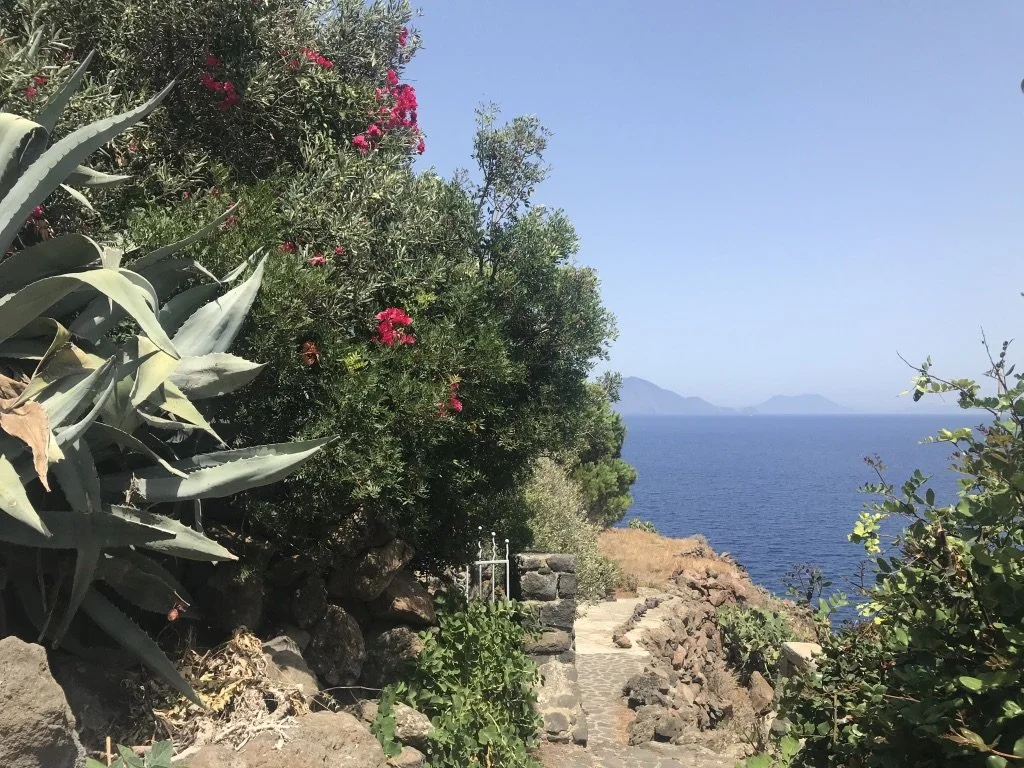
A taxi carries us from the port at Santa Marina along twisting roads to the village of Malfa. At Hotel Signum, the staff helps us plan our stay, and we settle into a bright, airy room with an iron bed and lace curtains.
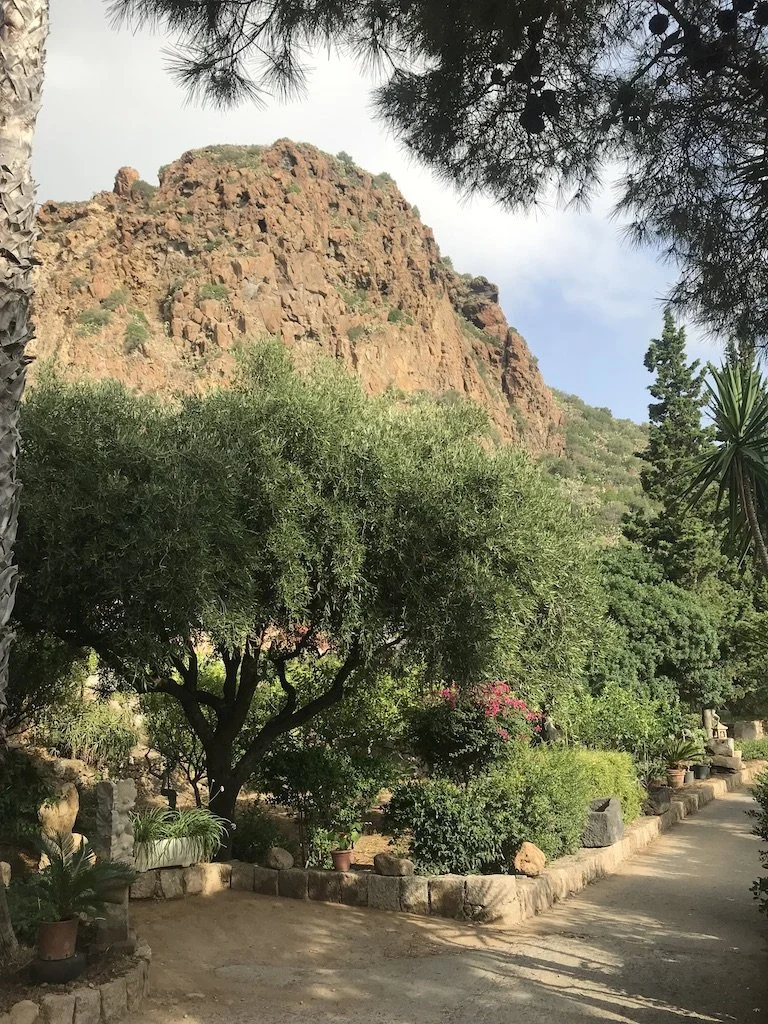
Our first excursion is down the steep path to Spiaggia dello Scario, past dramatic volcanic formations and views of clear Mediterranean water.
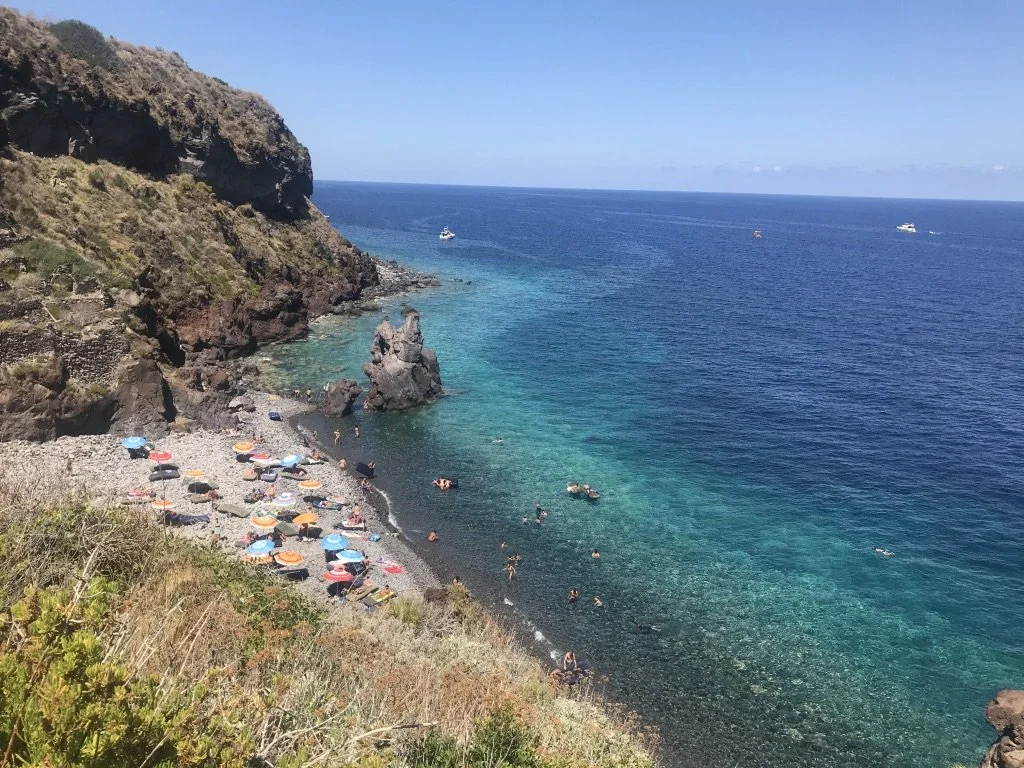
The beach has an ingenious system: buy a ticket at the café, hand it over to a very tan young man, then wait while he inflates a mattress and carries it, along with an umbrella, to your chosen spot.
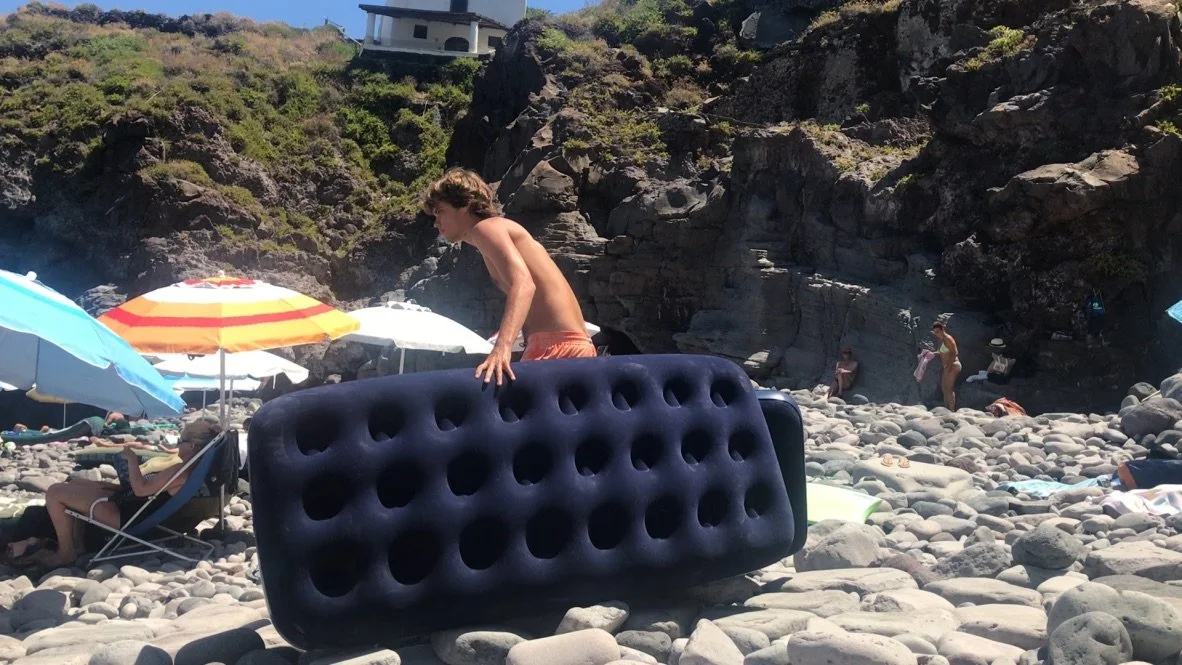
“Quite the operation they have going here,” Roxy says.
The surf is too rough for a swim, so we sit among the rocks and let the waves splash us. Lunch at the little café is simple and delicious: tomato salad with capers grown on the island, tuna, mozzarella, red onion, and olive oil. A perfect meal after a day by the sea.
That evening, we meet Celine and Erwin, a couple from Paris who also have a home in Tel Aviv. Over cocktails on the hotel patio, we watch their adorable twins toddle from table to table, greeting guests in Hebrew and French. The whole scene feels perfectly at home at Hotel Signum, whose peaceful, village-like layout invites us to slow down. Its rooms are tucked among several buildings, with gardens, terraces, a library, a spa with a geothermal pool, and lovely sea views.
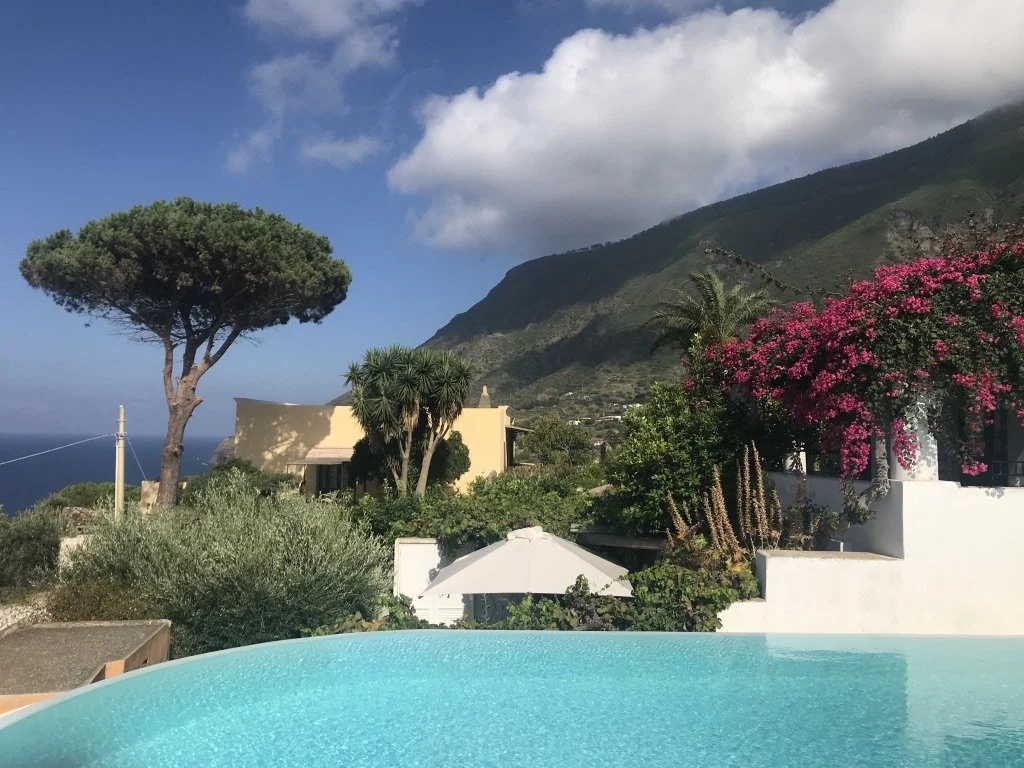
We have dinner at the marvelous Michelin-starred Ristorante Signum, set among lush vines and terraced vineyards. We’re seated beside Dan and Kate, a young British couple from London, and bond over a meal that lasts more than three hours and includes many courses, each offering a new reason to appreciate the chef’s exquisite cooking.
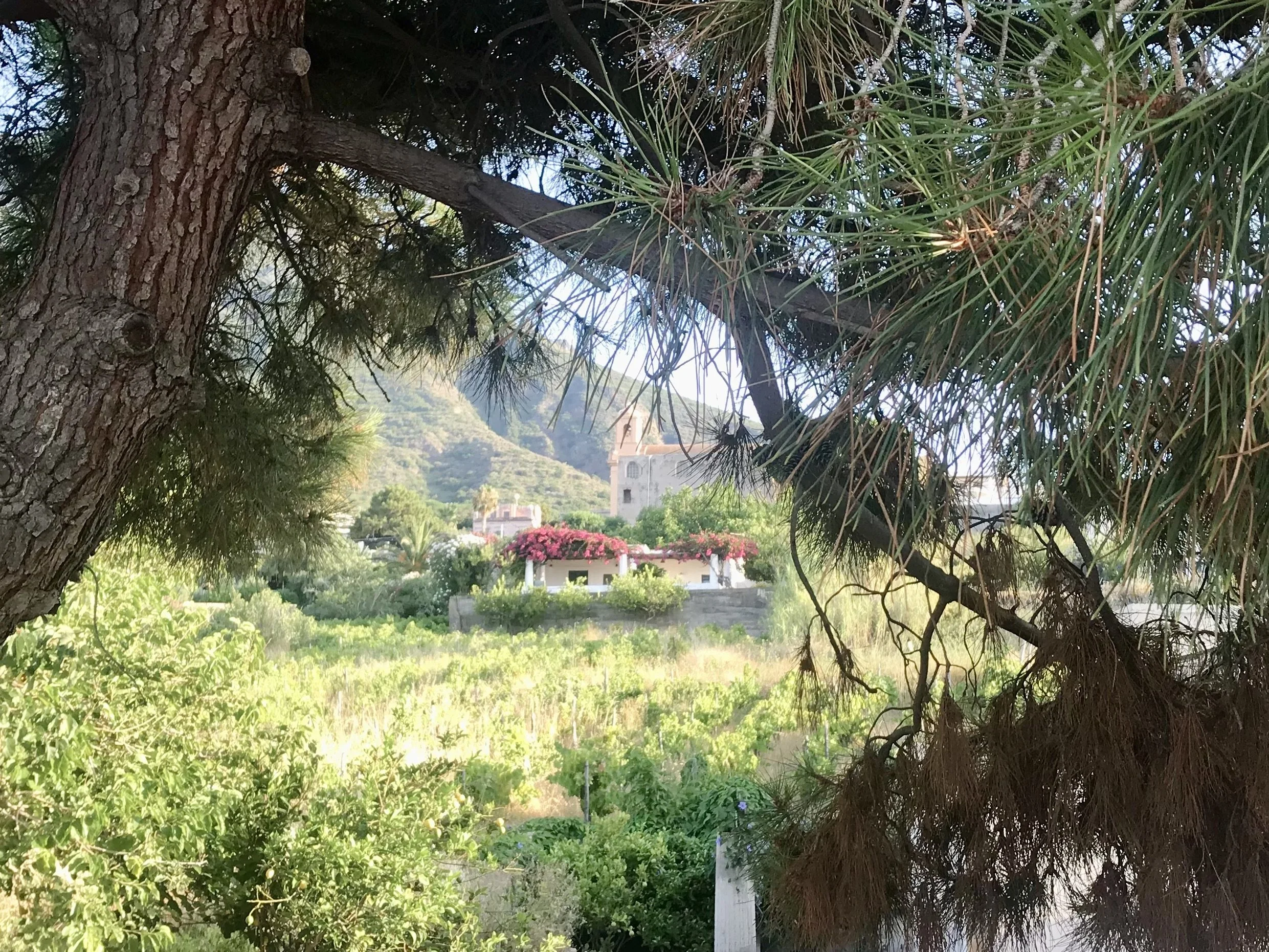
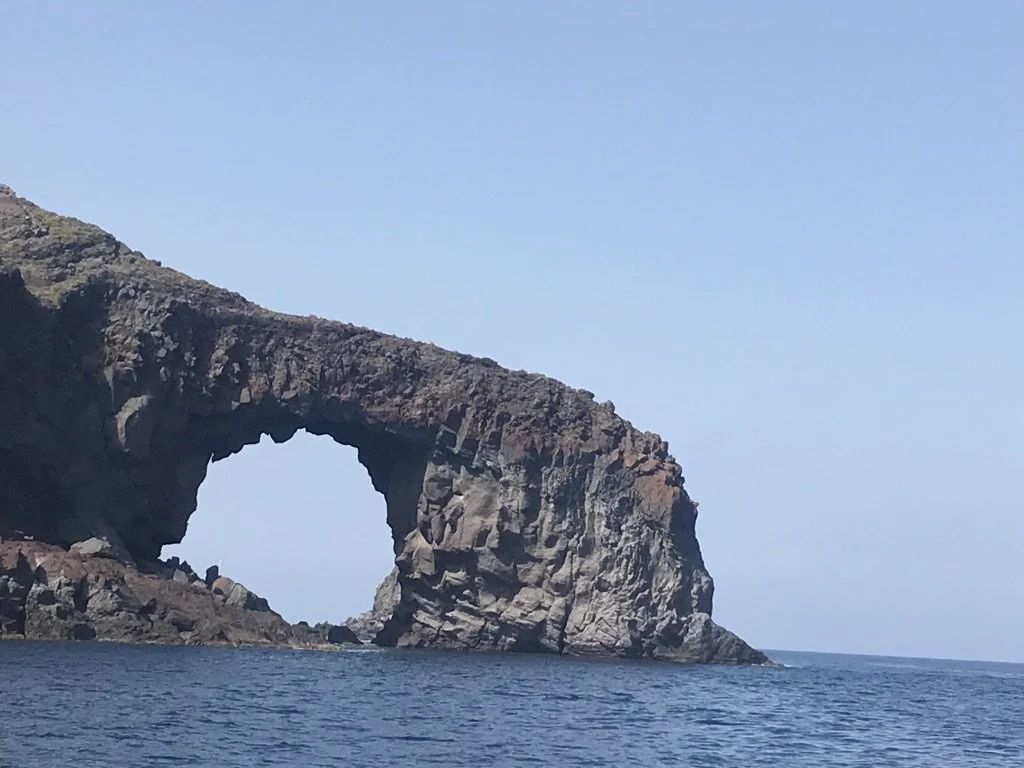
The next morning, we hop on a boat to explore the surrounding islands. The snorkeling is wonderful: the water is so clear we can see rocks and sea life below us. Our captain makes fresh tuna pasta for the group with fish he caught that morning and tomatoes from his garden. Then, he pours homemade wine from an unlabeled bottle. We carry our plates to the deck and eat with the sea all around us.
It isn’t long before Roxy strikes up a conversation with two sisters from Rome. Their parents, both doctors, join in, telling us about life in the Eternal City and the challenges young Italians face. “The jobless rate is insane, and we’re suffering from an influx of right-wingers and bad politics,” their father says. It’s one of those unexpected conversations that stays with you — not because anyone has a perfect answer, but because everyone is willing to listen to and empathize with one another.
I love every minute of this seafaring day, and my thoughts drift to memories of boating in Turkey, Croatia, and the Amalfi Coast.
That night, we wander Salina’s streets beneath its twin peaks. It’s the greenest of the islands, famous for its starring role in the 1994 film Il Postino.
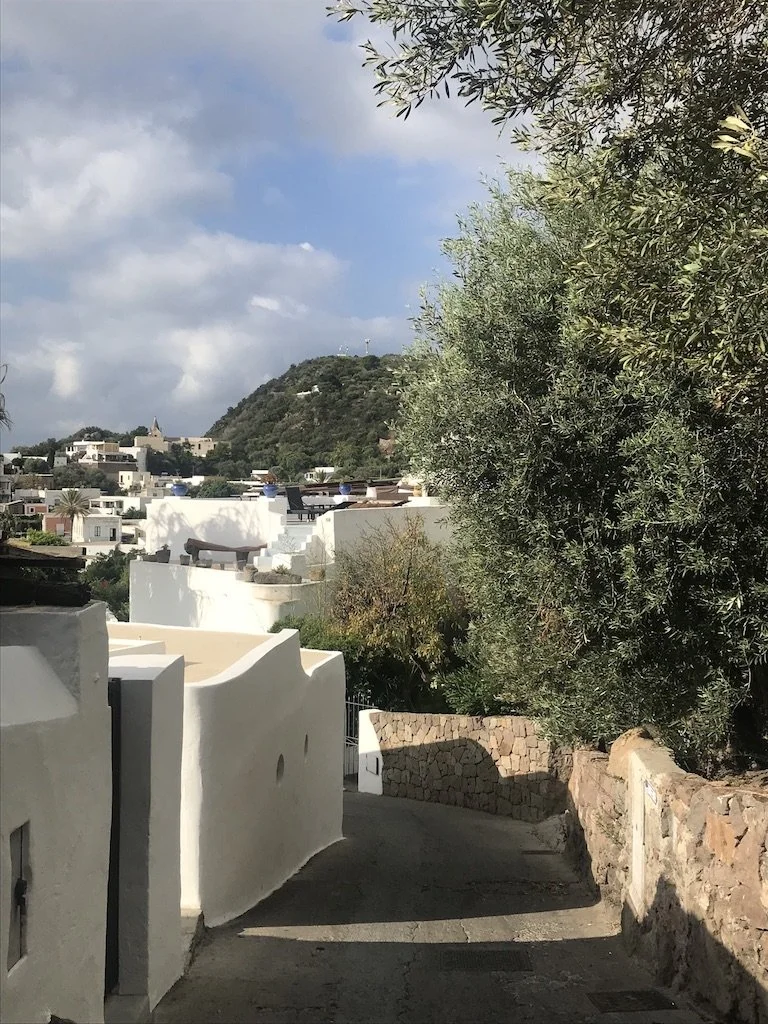
I love the lush landscape and chic shops. We dip into a boutique and snap up a pair of Sicilian ceramic heads adorned with elaborate crowns, lemons and pomegranates. We ask the shop to ship them home along with a pair of small plates painted with green vines, oranges, and angels. Roxy and I are delighted with our purchases.
Dinner that evening at Capofaro, a Relais & Châteaux property, lives up to the seafront setting. The swordfish needs only a squeeze of lemon, while the Sicilian-style eggplant parmesan arrives bubbling with tomato sauce and cheese. Later, we share beef tartare topped with fried olives and capers. Roxy’s simple tomato spaghetti, made in-house with wheat grown on site, is heavenly.
Taking Our Time
Every meal in Salina is a three-hour affair, so we don’t get back to the hotel until midnight. When we walk arm in arm through the lobby and out to the patio, the guests are still eating in the open-air restaurant. I turn to Erwin, who’s dining with his family, and say, “My God, everyone eats late here.” He looks up from his dessert and says, “It’s not that at all. The service is just slow—as is everything on these dreamy islands.”